

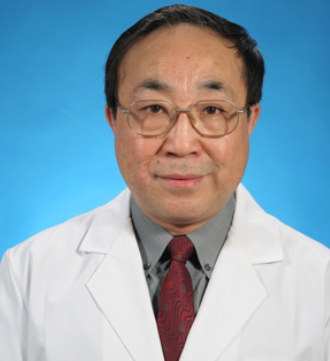
Yang Chuan_Expert in Functional Repair of Facial Paralysis Sequelae and Facial Plastic Surgery, Department of Plastic and Reconstructive Surgery, Shanghai Ninth People's Hospital (杨川)
Biography
Areas of Expertise
Yang Chuan works in the Department of Plastic and Reconstructive Surgery at Shanghai Ninth People's Hospital. With years of experience, he specializes in functional repair of facial paralysis sequelae and facial plastic surgery,
Biography
Yang Chuan, Chief Physician, Professor, and Full Member of the International Society of Aesthetic Surgery, has been engaged in clinical surgical work for 42 years and has accumulated extensive clinical experience. He is creative and possesses excellent aesthetic skills, which greatly benefit the further deepening of his clinical expertise in plastic surgery. He has made outstanding achievements in the treatment of late facial paralysis. His invented “neurovascular muscle bundle transplantation” for repairing late facial paralysis has achieved excellent results. In recent years, he has also pioneered the use of “sternocleidomastoid muscle transposition” to repair late facial paralysis; it not only achieves good results, causes minimal injury, allows rapid recovery, and has a high surgical success rate, but also enables a large number of patients with facial paralysis to return to social life with a natural smile, and is well received by patients. The modulation surgery he invented for repairing facial muscle synkinesis has good effects on improving the smile of patients with sequelae of facial paralysis. For facial and breast medical aesthetics, corresponding surgical plans can be designed according to the positional proportions of the patient's facial features; this can both correct facial deficiencies and preserve the original characteristics, thereby making the face appear more harmonious and beautiful. Whether for double-eyelid surgery, upper eyelid laxity, eyelid bag correction, rhinoplasty, nasal tip plasty, auricular plasty, facial rhytidectomy, etc., he can use precise and skilled surgical techniques to achieve good results for patients.
In breast aesthetics, Professor Yang Chuan specializes in reduction mammaplasty for macromastia and augmentation mammaplasty for small breasts. With in-depth and systematic research in human aesthetics, he can carefully design breast size, shape, and position according to the patient's height, body shape, and personal requirements, achieving personalized breast aesthetics. In addition, for breast defects caused by congenital factors, disease, or surgery, breast reconstruction can be performed using a local musculocutaneous flap combined with implantation of an expandable breast prosthesis. This surgery causes minimal trauma and allows rapid postoperative recovery; it not only restores the female body shape but also helps patients regain confidence.
Through years of clinical practice and continuous rigorous study, he has unique expertise in the repair and reconstruction of congenital and traumatic limb deformities and burn deformities. Because of his conscientious and responsible work attitude, pursuit of perfection, skilled and refined surgical techniques, and good medical ethics and professional conduct, he is highly praised by patients.
In scientific research, his interests mainly focus on experimental studies of neurovascular muscle bundles enabling denervated muscles to regain innervation, clinical studies of neurovascular muscle bundles promoting nerve regeneration, studies of neurovascular muscle bundle transplantation for repairing late facial paralysis, and studies of pedicled sternocleidomastoid muscle transposition for repairing late facial paralysis, studies of repairing facial muscle synkinesis, and repair of sequelae of facial paralysis, etc. He maintains internationally advanced technical and research levels in these fields. Professor Yang Chuan has published nearly 20 original articles and has contributed to the writing of monographs in these fields, and has successively received the Third Prize of the National Invention Award (one), the Second Prize of the Shanghai Science and Technology Progress Award (one), and the Third Prize (two).